


The headline below is the complete truth and exact representation of the situation that France are in. Kazaks said more tightening could be needed if inflaiton persists (which we know), but more importantly emphasised that the ECB can’t fix the French situation. As I laid out in the Substack chat, the problem in France is a fiscal problem (which comes from the budget and politics around that), and the recent riots are making the fiscal side worse EVERY week. These are two inputs that monetary polict CAN’T fix.

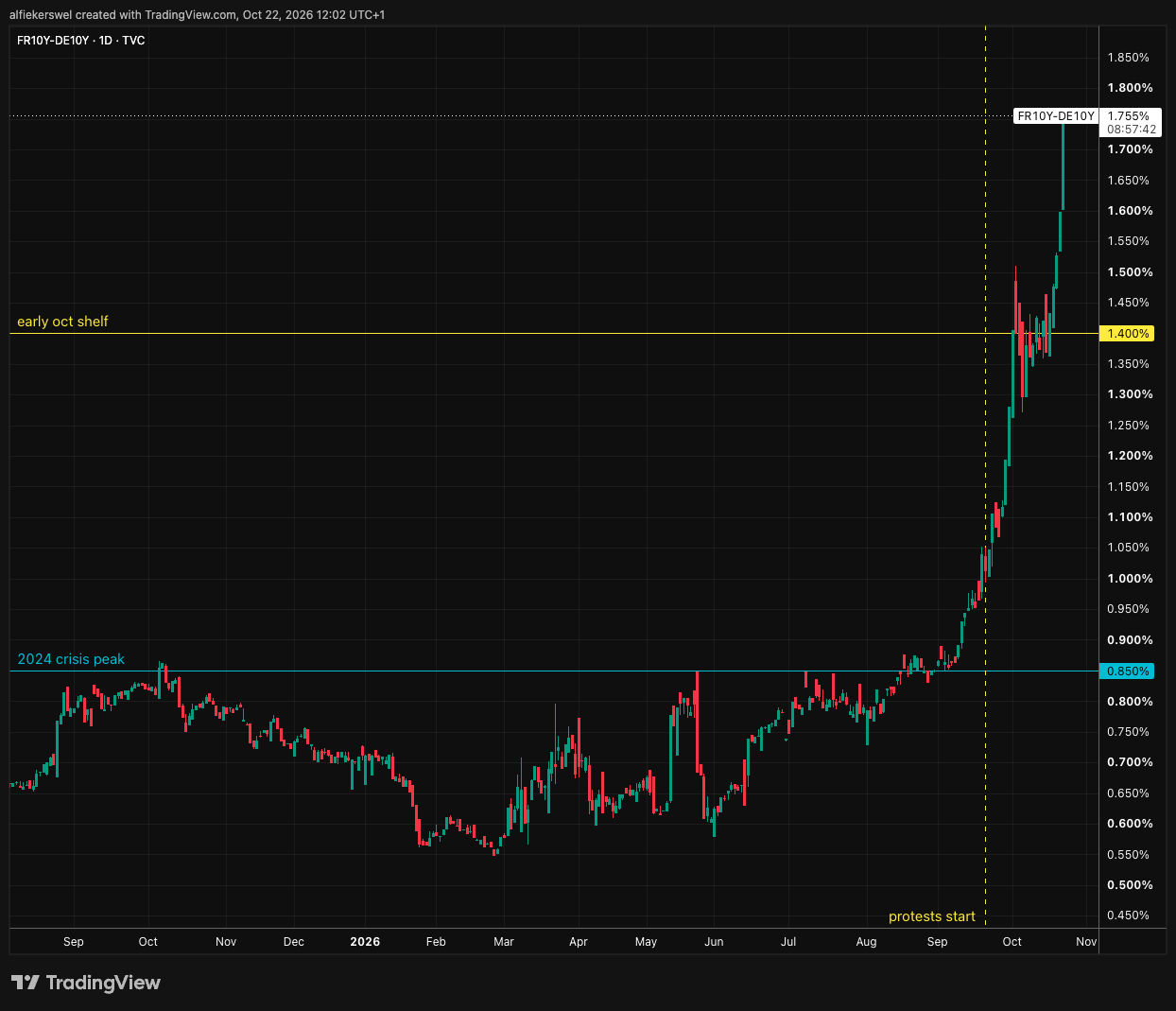
When Barnier was getting thrown out in 2024, the OAT/Bund spread was roughly 80bp, we’re now seeing it trade at about 175bp which means that even at the extreme in 2024, we didn’t reach even half of this spread. If the ECB were really the problem, Bunds wouldn’t be rallying as they have been across the last couple of weeks. French OATs are literally moving in the opposite direction to German Bunds…
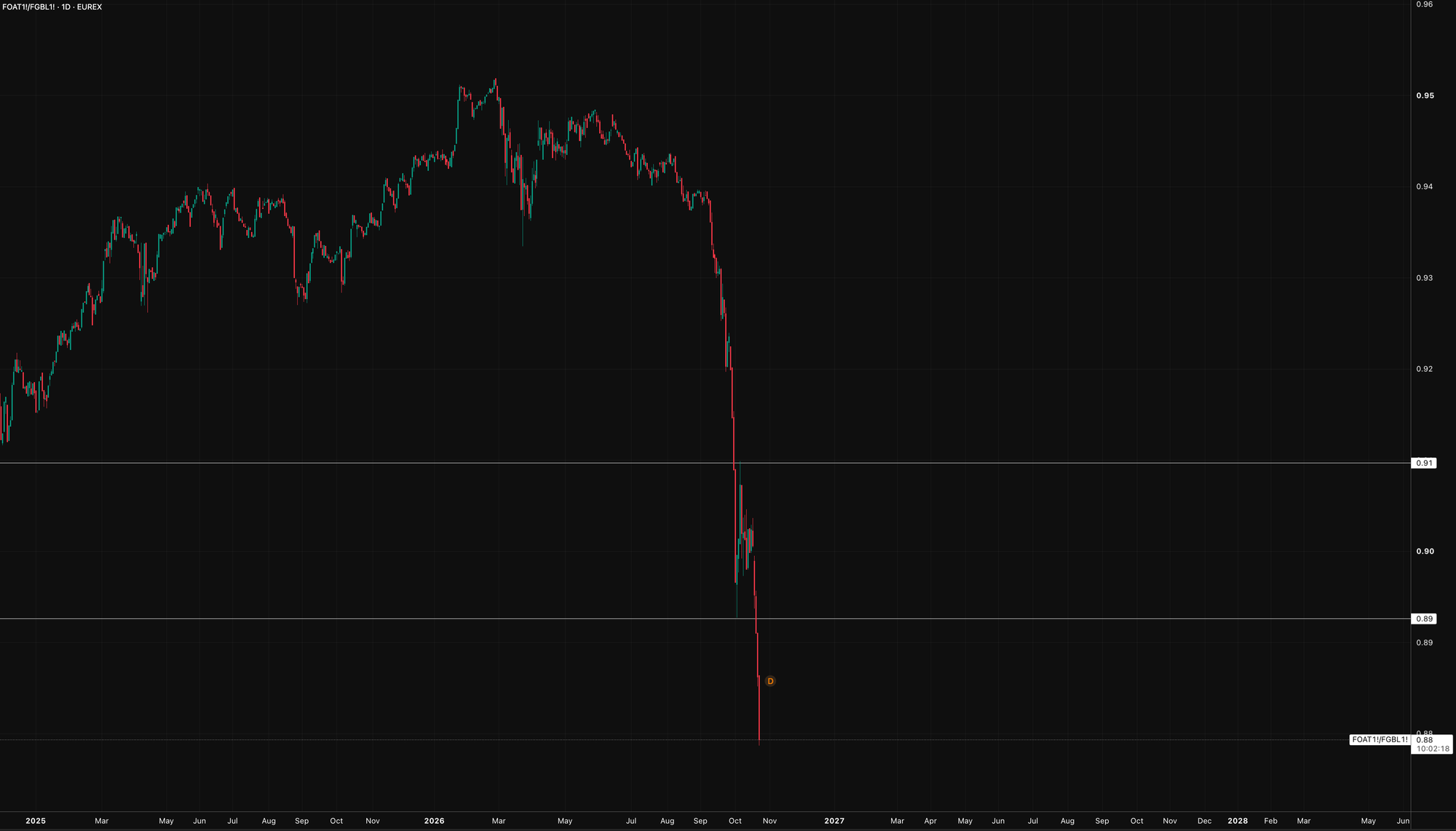
This French credit event is being driven solely by the budget and politics and the ECB will not be able to fix it without bending its own rules or even worse, pushing the problem into the euro. The TPI was created for countries who are following the fiscal rules, but France is under a massive deficit procedure and parliment is crushing the budget). Until this budget issue is resolved (which once again, is NOT an ECB issue), we will probably hold an extreme in the OAT/Bund spread.
Now I don’t neccesarily think this spread is going to keep blowing out as it has, but for sure I don’t see us trading back to normal levels anytime soon. Even if the sprwad begins to mvoe back up (French OATs outperforming Bunds), we will still be at an extreme.
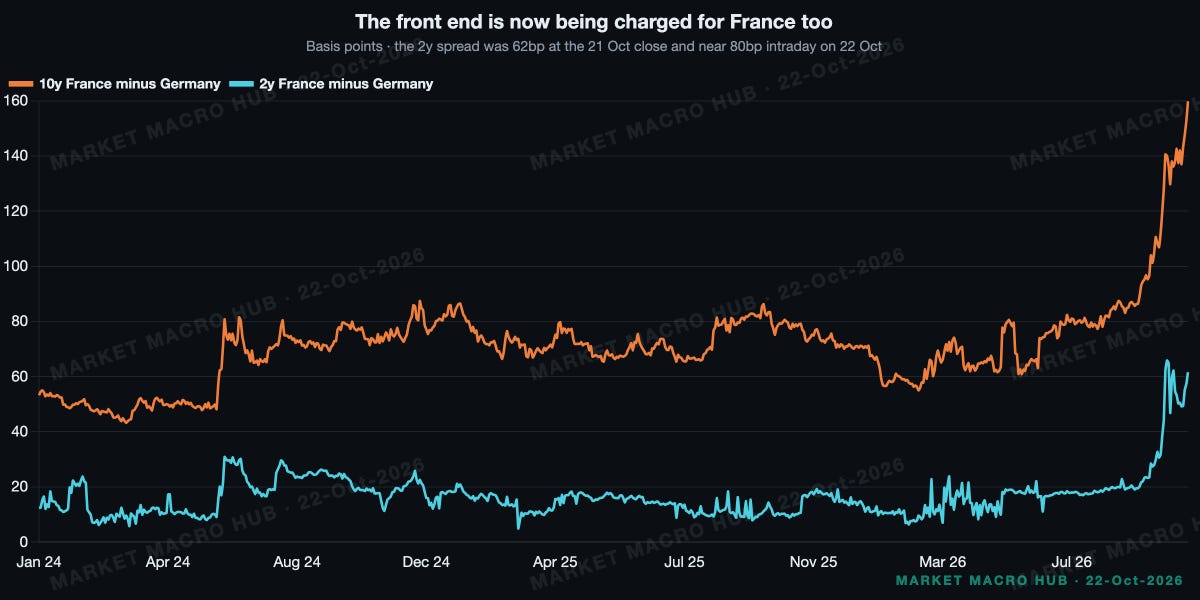
In the chart below you can clearly see the spread was drifitng up before the 2027 budget came out, then rallied hard after the bill was published October 1st, and then it broke out again this week.
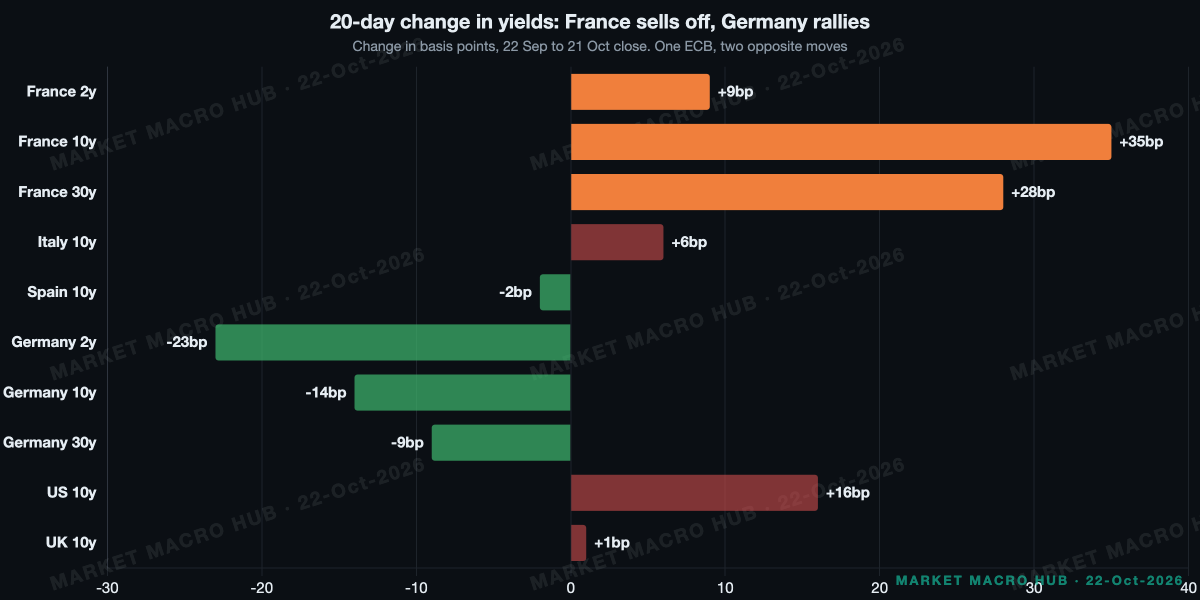
Now look at the 20d change across the curves. If it was some type of global duration sell off or the ECB being way too hawkish, then we’d see Bunds leading it. But instead what we’re seeing is money leave France, and a MASSIVE chunk of that money head into Germany.
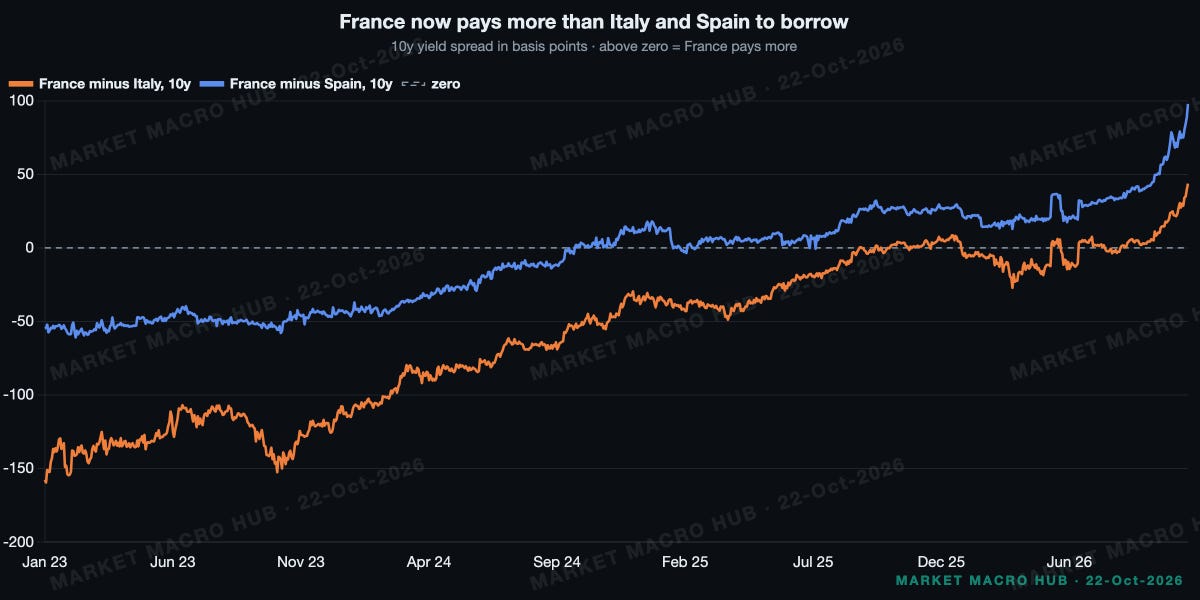
France has also sat between Germany and Itay when it comes to credit. But these dynamics are shifting and yields in France are more than BOTH Spain and Italy.
The front-end is just as important becaue whn the short-end of a soverign curve sarts moving this aggressively, the market is pricing something that can happen real fast (a downgrade, government failing, censure vote, intervention). The French-German 10s30s has also flattened to a 1 year low at the same time. When the curve is flattening from the front-end, it means there is credit stress and people are more worried about the next 6 months than they are about 2050.
This entire idea surrounding the ECB just being able to step in isn’t practical. You’re going to see people throw comparisons like 2012 around where an ECB memebr can come out and say they’ll do whatever it takes, then spreads collapse without ANY ECB buying. But it is key to note that just because something worked previously, it does NOT mean it will work in this scenario.
Now firstly from a rates POV, there’s only one policy set out for 20 countries. The ECB have already hiked in both June and September, and the inflation backdrop STILL causing tail-risks. So let’s pretend the ECB cut to help France, they’d also be cutting for Germany, and everyone else just when they should be tightening. Kasaks is telling us clearly that the bias is going the other way (see headline at the top of this report).
France will get wrecked by every hike from the ECB and all hawkish comments from them and both of these functions will likely keep OATs trading at these extreme levels. Once again, I don’t expect them to continue selling off as they have, but I don’t expect any type of longer-term recovery here, pinned lower until fiscal policy changes in my view.
As I said above, the TPI was literally built to fight unwarranted and disorderly moves. Remember, to qualify for it you need to have NO servere macro imbalances, a sustainable debt path and most of all… steady policies.
Lagarde also made it clear that the tool comes with CLEAR conditions. So for the ECB to use TPI here, it needs to look at a spread move driven by a budget that hasn’t even passed and then call it unwarranted. Sorry France, not sure you make the cut.

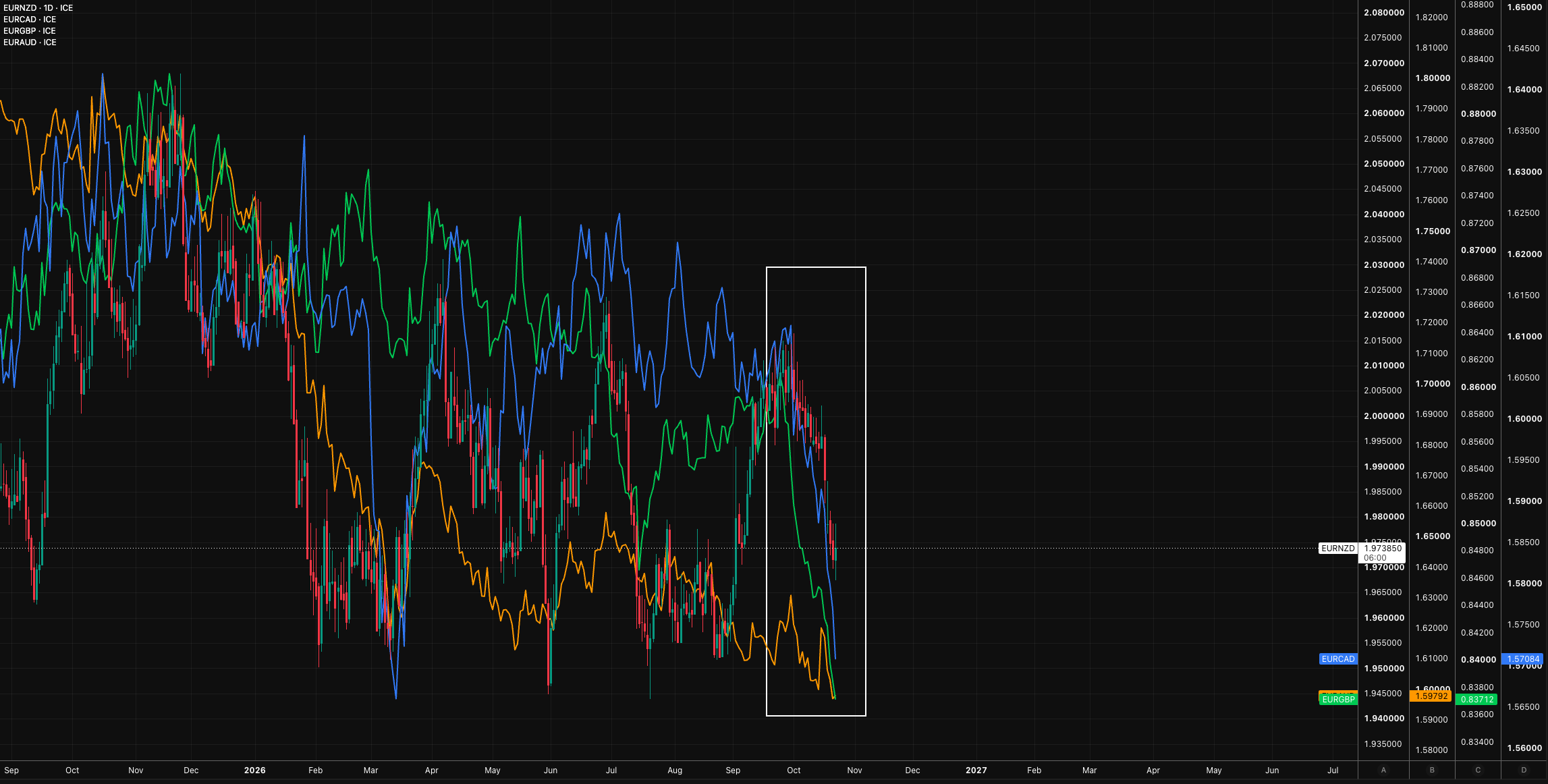
Now let’s pretend the ECB did step in. All that means is that the bonds move from private balance sheets onto the Eurosystem. The deficit will still exist and more importantly, the interest bill is STILL there. It would just mean that the risk moves into the currency because unconditional support for a country that is not fixing its budget (and inflation above target) is actually a form of debasement. That is WHY the euro has been falling with the spread (but the USD has mitigated some of these effects, and you will notice EUR/USD pair a little stronger. But broadly, the euro has been dragged).
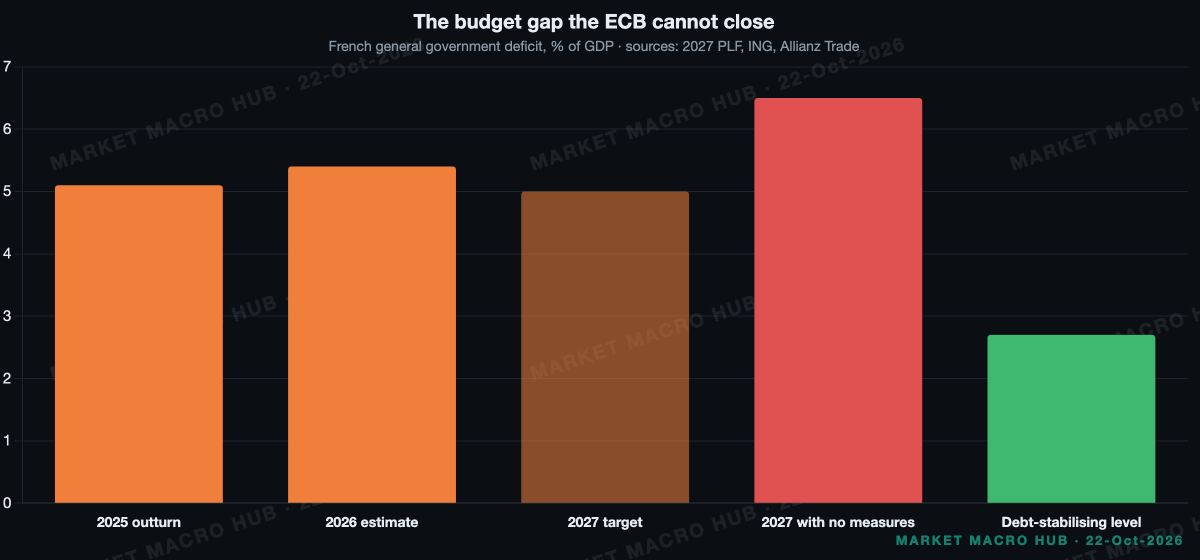
Also for anyone thinking the ECB is of use, there is also a budget gap that they can’t close. French government deficit is RISING and none of these figures below care about a 25bp move by the ECB (up or down).
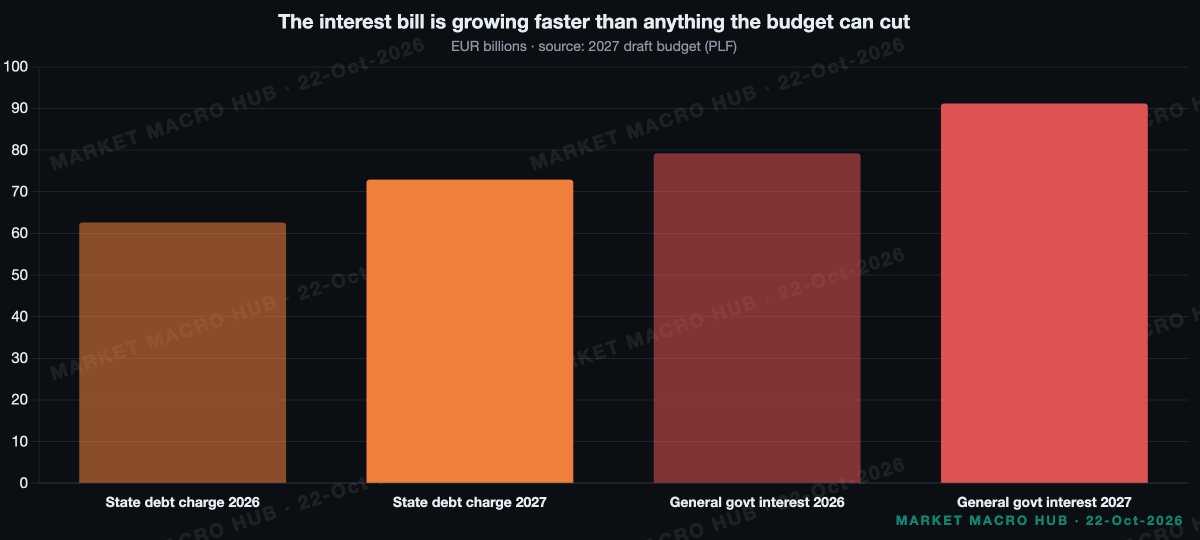
Monetary policy sets the PRICE of money for the every country inside of the eurozone, but France’s problems are the QUANTITY of debt it has to sell and a fiscal policy that is struggling to shrink it. You literally cannot fix one country’s quantity problem with a price tool that hits every single eurozone member at once.
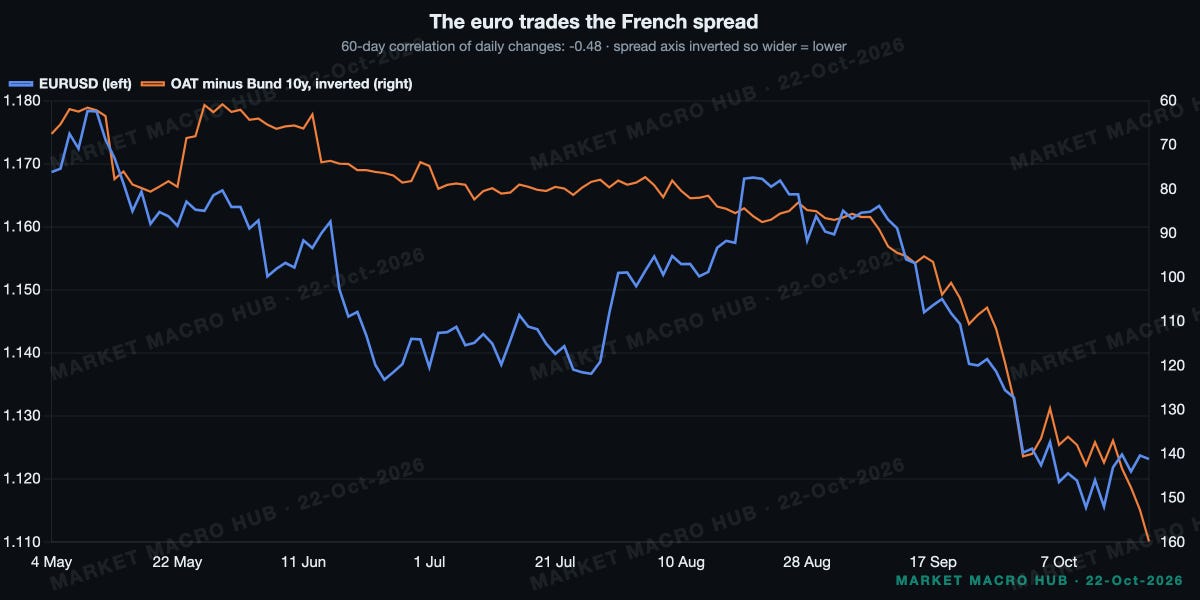
France is the 2nd biggest economy in the eurozone so none of this stays in OATs. This whole situation could easily spread into the euro and we’ve already seen the euro follow the spread almost tick for tick. Considering the currency pair is meant to trade differentials, it’s been trading VERY closely to the spread and risks inside of France.
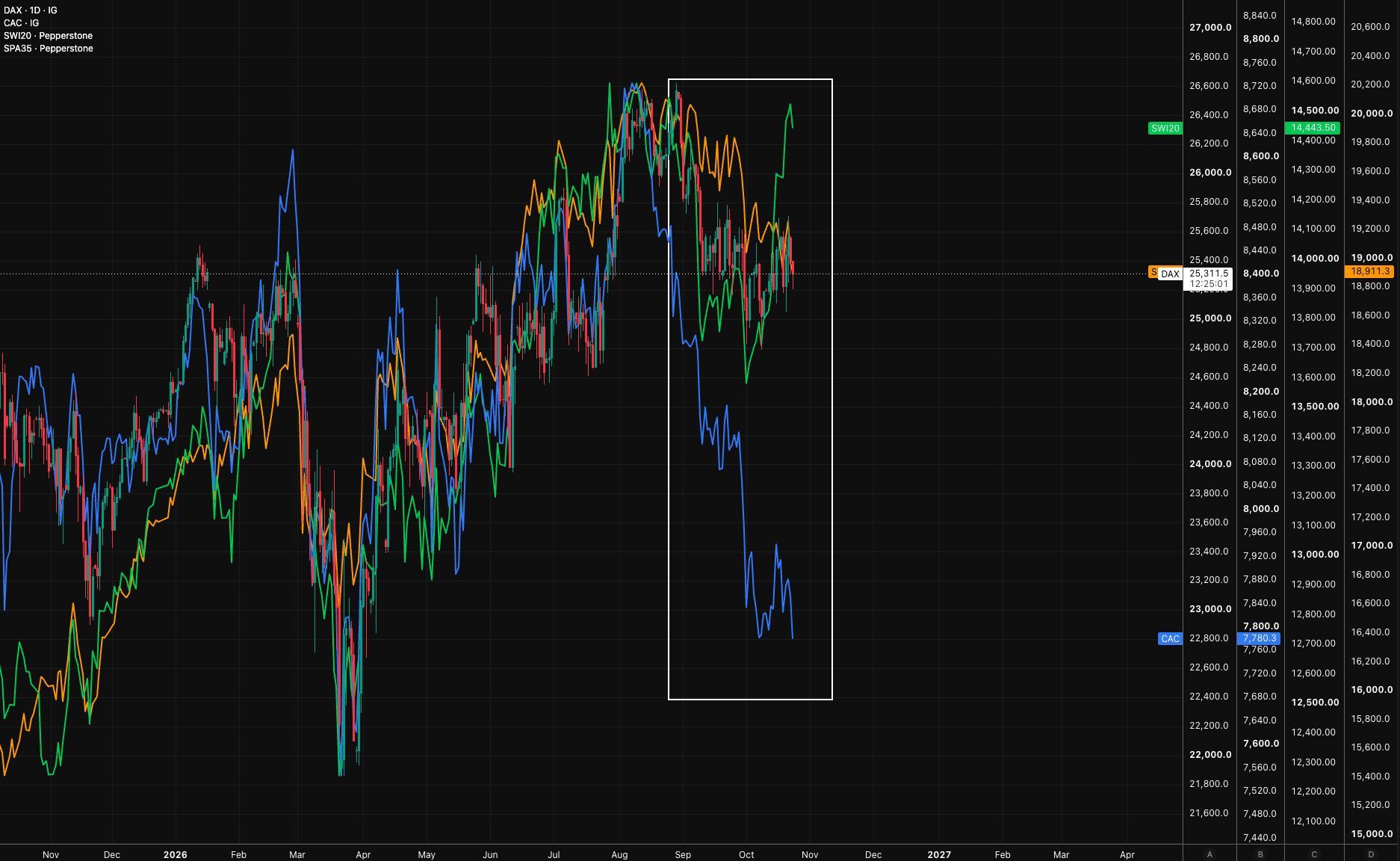
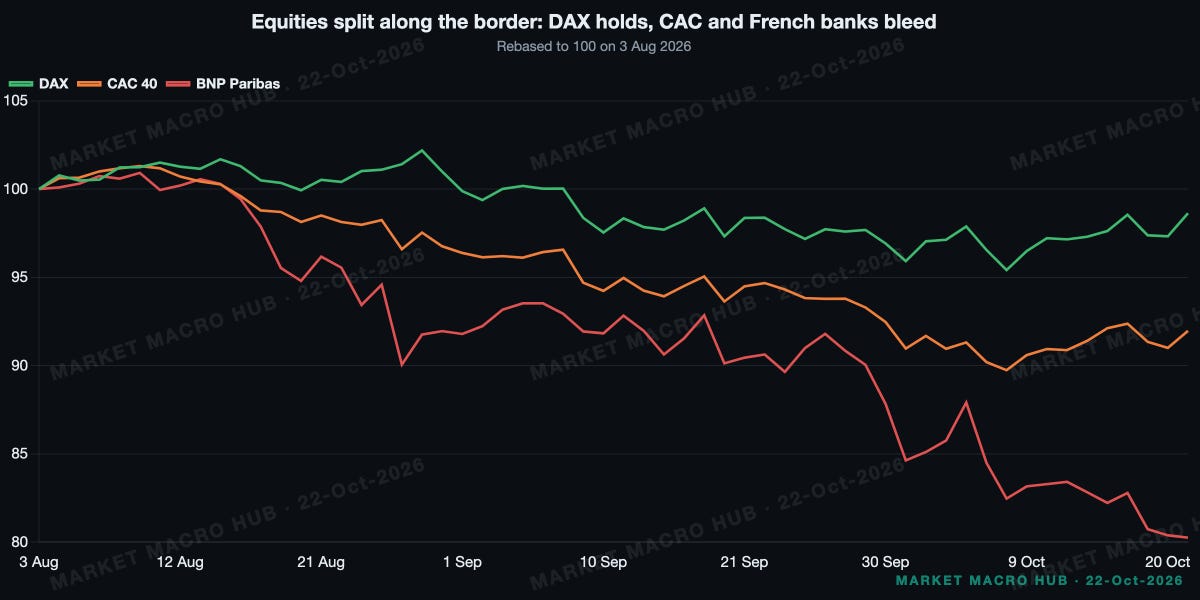
To emphasise on the fact that this is still just a France issue rather than a eurozone issue, German, Spanish, and Swiss stocks have all held up MUCH better and are diverging from French stocks. French banks are dragging the CAC (down over 11%) because they own a lot of the governments debt which means that every single time OATs sell off, there is a hit to their capital and funding costs.
German yields dropping as French yields RISE is a clear flight to quality inside the eurozone. This takes away the ECB’s excuse to act because if you average financial conditions across the eurozone, they look fine (German and French yields are neutralising eachother).
These government bond spreads will only stop widening when somene credible removes the fiscal risk (which doesn’t seem likely or close at all right now for France). Either the central bank backstops the market, forced sellers run dry or the government backs down. France today has neither a government with votes to cut the deficit nor a central bank willing or able ot step in fast (especially with inflation rising and growth flat). So even if this move is stretched short-term, it doesn’t mean we will see any fast recovery.
If we get Moody’s downgrading French debt into this weekend then there could be a further blowout in the spread (OAT/Bund). Selling exhaustion is likely going to be a factor in OATs right now too, but that doesn’t stop bonds continuing to sell off, there is just need for another catalyst for that. If Moody’s affirms and the government get through the budget vote on the 27th, then the spread could begin trading back tighter pretty fast.
Thanks
Alfie
Disclaimer
The information in this publication is provided for informational and educational purposes only and is believed to be reliable, but its accuracy and completeness are not guaranteed. Nothing herein constitutes investment advice, an offer, or a solicitation to buy or sell any security, derivative, digital asset, or other financial instrument, nor a recommendation suited to any specific reader. All figures are drawn from the day’s computed data set at the time of generation and may be delayed, revised, or superseded. Markets involve risk, including the possible loss of principal; past performance and historical relationships do not guarantee future results. Readers should conduct their own research and consult a qualified financial adviser before making any investment decision. The author may hold positions in instruments discussed. This publication is licensed for the personal use of the subscriber only: redistribution, reproduction, or resale in any form is prohibited. © 2026 MARKET MACRO HUB. All rights reserved.
This is a fine piece of writing ... Something that Reuters don't do