As I've mentioned previously there is a hiking cycle sitting underneath a crowded AI position. So far the index hasn't paid for it. As stated Monday I don't see how the Jensen put would get as far as the Fed with each rise in ES returning more hikes to the slope and interest rates constraining the upside.
This played out as expected. The Huang rally was largely unwound over the course of the day, with most of the 14% rise the previous day erased from semi's, a drop of approx 2% in the NDX 100 and a retreat to near 20 day lows in HYG.
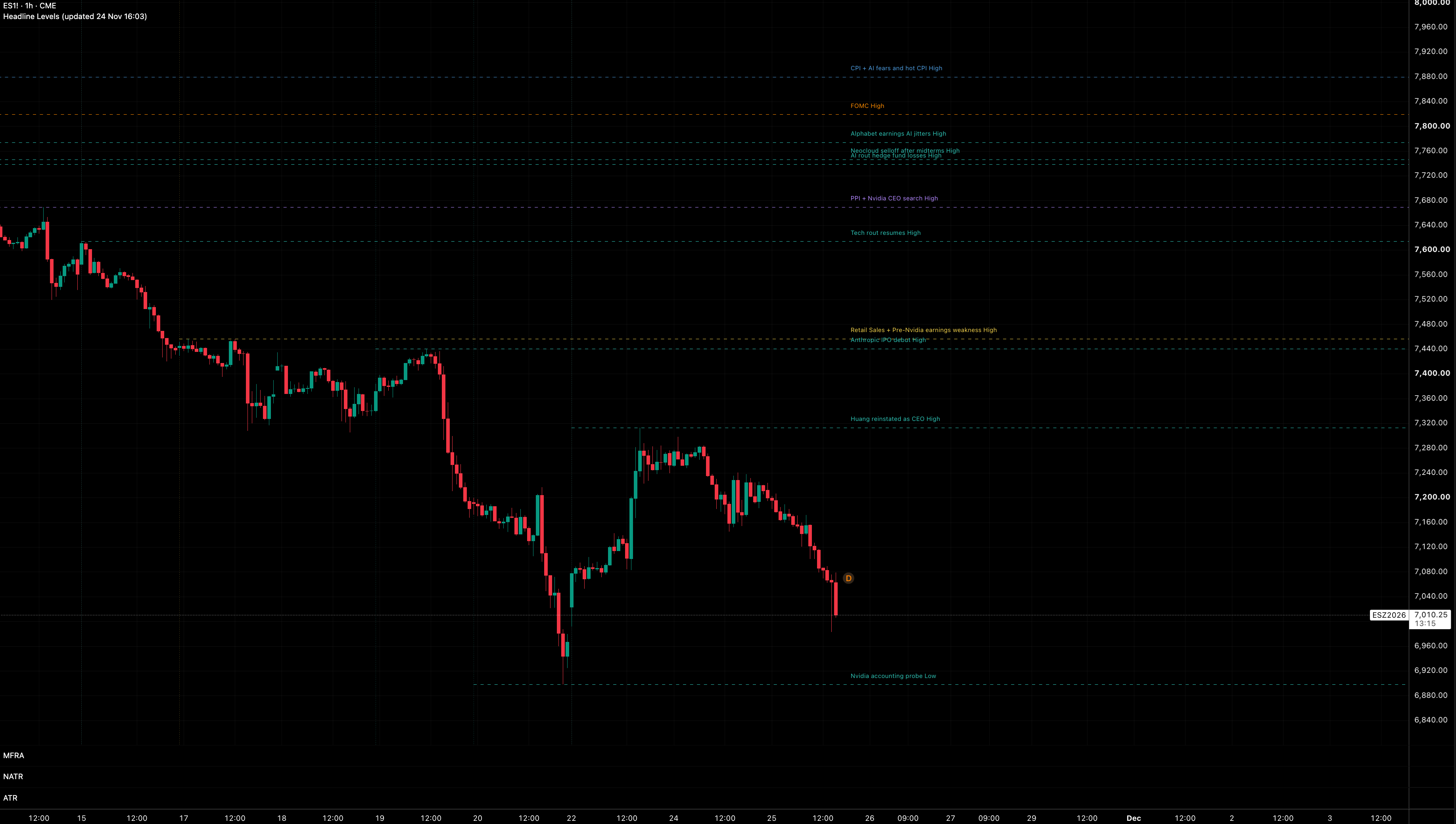
However, the explanation I gave earlier was too narrow. The AI sector experienced a pullback on a day when 2y yields were essentially flat, 10y yields were down, and both the Equal Weight and Russell ended up positive. Given this, you would expect at least some relief for the AI stocks.
Instead, many of the more leveraged and issue dependent areas of the sector were hit hardest, including leveraged chip ETFs, the Neoclouds, CoreWeave debt, and even Anthropic, which finished below $83, below their IPO price.
Well the question on everyone's lips this morning is the same. Huang has returned, and Dell just beat revenue estimates by more than $5 billion on record AI backlogs, with Oct PCE landing prior to open. If core numbers come in weak, does the dip get bought, and has the selloff in AI completed?
We have seen the 2y play only a secondary role in determining the price of the various AI names for about a month. My model of equities and bonds has shown no correlation between the S&P and the 10y since Oct 28, and for the last 20 days the S&P has been more closely correlated to HY than to any point on the Treasury curve.

So it would appear that the cost of capital for the AI build-out is set by those funding it and those purchasing new issuance of AI names. Both of these groups sold Tuesday.
Unwind is occurring via widening credit and increasing equity issuance, neither of which the Fed can relax until they've caught up to their inflation target. So any miss on the softer side should serve to push down rates at the front end without doing much to ease credit spreads or equity supply, i.e., the area under pressure.
The order backlog at Dell, viewed positively today, would be a textbook case. All of this product will need to be financed. Marginal buyers would likely be the same borrowers whose bonds hit record lows on Tuesday.
Where We Are
None of these fundamentals have changed. Strong growth continues: I estimate 3.2% now; claims remain around 200k and average gain in payrolls over the last 3 months around 137k. Core PCE was 3.1% last month and services excluding energy above 4% annualised.
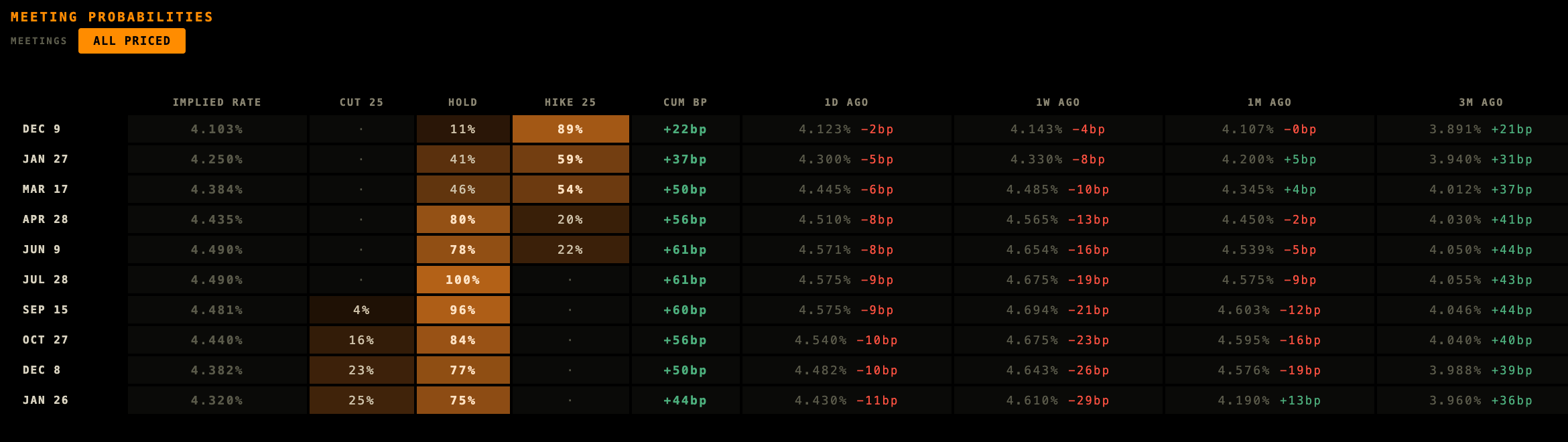
On Monday, Williams stated his expectation was inflation around 3.5% by end of year and down to 2% by 2028. There is currently a 95% chance of a hike at the 9 December meeting, with the market anticipating a terminal rate of 4.56% by June. Most of the change over the past week has been to later points in the strip, with 9bp and 15bp removed from the pricing of the June and September meetings respectively, with December unchanged. So now the market is less convinced about continuation after the next hike.

So this sits atop everything else. As mentioned this has been the focus over the past 20 sessions. Both Alphabet and Amazon came in below expectations on the 28th and 29th of October, prompting some scepticism about returns on capital expenditure. With the Democrats picking up wins across the board on the 3rd of November concern about regulation arose, and the S&P fell 4.4% two days later. On the 6th of November CoreWeave's bond yield went through 16%, and on the 12th of November it was announced that Huang would step down.
Anthropic completed its IPO on the 19th with little fanfare, with the S&P closing down into correction territory the following day. On Monday it was announced that the board of directors would reinstate Huang, after receiving input from what its statement called senior levels of the US government. Trump took credit, saying "I made the deal", stating that he felt Huang had now been "exonerated". Shares of NVDA surged around 33%, leading to the best single session performance of the S&P since April 2025.
Over this 20 day period the Tech sector fell nearly 13%, with the median sector roughly flat and the equal weight version down about 2%. This can clearly be seen in the chart below.
All 3 periods are seen as individual factors (i.e. not common) in my price model: today, weekly and 20 day. I think this is due to 2y and rates vol not trading the sell off the way they would trade a growth scare. All but 1 of my measures for risk off are positive, due to widening in credit and high levels of VIX (>25). Obviously it's possible to have both selling concentrated on a particular sector and spill over into credit. Hence the widening confirms the move but the underlying bonds don't, which I explore further below. Overall my models suggest no position. Clearly this area of weakness is waning, but as there's a risk off component to the move its ending wouldn't be a reason to buy.
It's worth paying close attention to Tuesday. There wasn't much movement in the 2y in Tuesday's cash session, and most of the drop occurred overnight. Conversely, the dollar was weak through most of the day, only seeing some strength overnight. So interest rates didn't climb on the day the rally failed. Of course the equity markets and 2y have been highly correlated over the past 20 days or so, so falling yields on a down day for equities, particularly the tech sector, would be expected, with the 2y closely tracking equity prices.
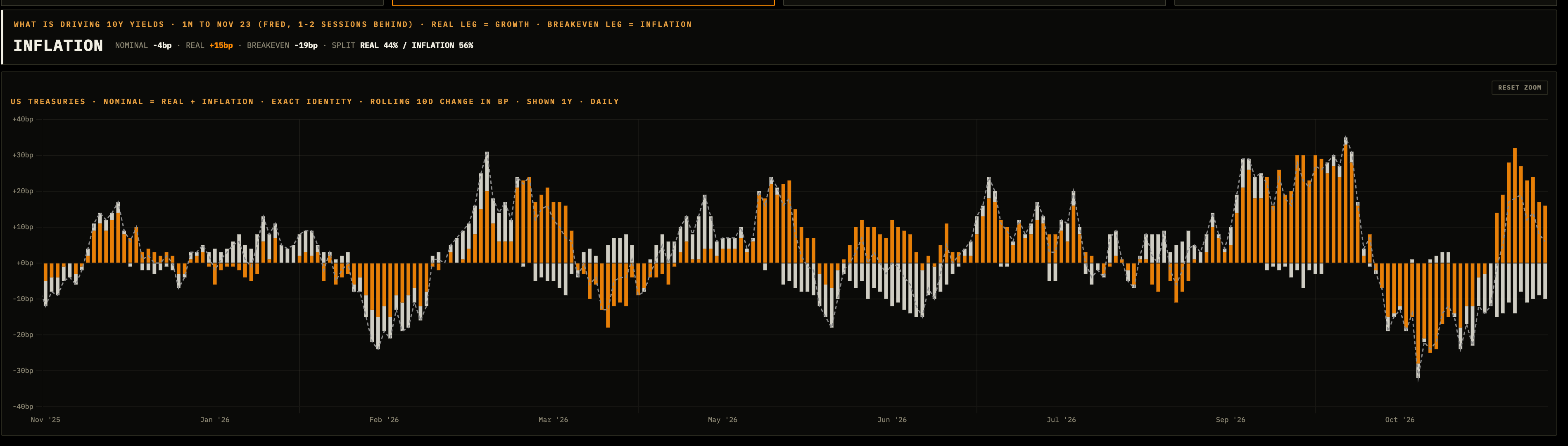
Although the 10y has declined this month, all of the decline is attributable to breakevens tracking lower crude oil prices. By contrast, the 10y real yield has increased roughly 15bp to around 2.8%. Thus the real cost of borrowing has continued to increase beneath the falling nominal yields, and borrowers in the AI sector must also pay a higher spread over and above this.